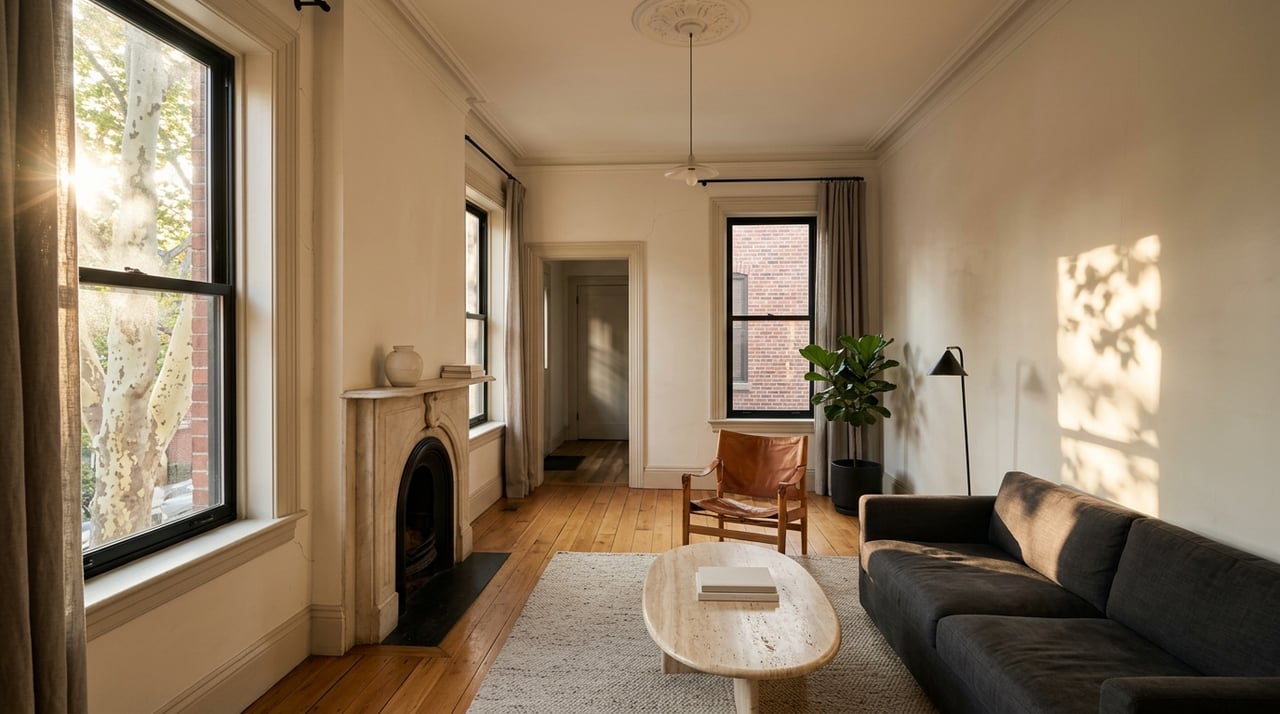
If you are thinking about selling a West Village townhouse, you are not bringing just another home to market. You are selling a scarce asset in one of Manhattan’s most closely watched townhouse pockets, where pricing, prep, and buyer expectations all work differently than they do for condos or co-ops. The good news is that with the right strategy, you can position your property around what buyers actually pay for here: rarity, condition, scale, privacy, and architectural character. Let’s dive in.
West Village townhouses trade in a niche market
A West Village townhouse should be valued as a rare downtown luxury property, not as an extension of the broader apartment market. According to the Brown Harris Stevens Manhattan townhouse report for 1H25, Manhattan recorded 122 one-to-three family townhouse sales, up 21% year over year, with an average sale price of $6.27 million and an average of $1,414 per square foot. Sellers also received 93.0% of their last asking price on average, which points to a market where pricing discipline still matters.
That scarcity becomes even more pronounced downtown. In the same report, the Downtown submarket from 34th Street to 14th Street recorded only six sales in 1H25, with an average sale price of $8.46 million and a median of $7.3 million. For a West Village owner, that means your pricing strategy has to rely on a very tight set of comparable sales and thoughtful adjustments for details like width, outdoor space, condition, and lawful configuration.
The broader Manhattan market is much more liquid, but it is not the right lens for a townhouse sale. The Miller Samuel Manhattan 4Q25 market brief reported 2,682 closed sales, 6,257 listings, and 7.0 months of supply across co-ops, condos, and one-to-three family homes. That bigger pool helps explain why neighborhood apartment averages can be misleading when you are pricing a townhouse.
Why condos and co-ops are not your comp set
One of the biggest pricing mistakes a seller can make is looking at nearby condo and co-op medians and assuming the same logic applies. It usually does not. A townhouse trades on different fundamentals, and buyers are typically evaluating a different lifestyle and ownership experience.
In March 2026, PropertyShark’s West Village market data showed a condo median sale price of $2.8 million and a co-op median of $1.1 million, with 10 condo sales and 19 co-op sales. House data were too thin that month to produce a statistically significant read, which actually reinforces the point: apartment product trades more often, while townhouse evidence is thinner and more specialized.
That is why townhouse pricing should not be built from neighborhood medians alone. Instead, your valuation should center on recent townhouse sales, then adjust for the things that move the needle most in the West Village.
The features that shape townhouse value
Because there are so few direct comps, buyers and agents look closely at what makes one house more desirable than another. In the West Village, the most important value drivers are usually:
- Overall condition and renovation quality
- House width and interior scale
- Outdoor space
- Architectural detail and preserved historic elements
- Legal use and configuration
- Block identity and location within the neighborhood
Condition matters especially right now. The Leslie Garfield Q3 2025 Manhattan townhouse report noted that well-located renovated properties continued to draw decisive buyers, while estate-condition homes and multi-family conversions appealed to more value-conscious purchasers. In practical terms, that means your launch price should reflect how move-in ready your townhouse actually is, not just the prestige of the address.
Top-end results still happen when the product supports them. The BHS report identified 11 Saint Luke’s Place in the West Village as the top Manhattan townhouse sale in Q1 2025 at $24.95 million. That sale is a reminder that renovated downtown townhouse inventory can still command very high pricing when the home, presentation, and buyer fit align.
Historic district rules affect your prep plan
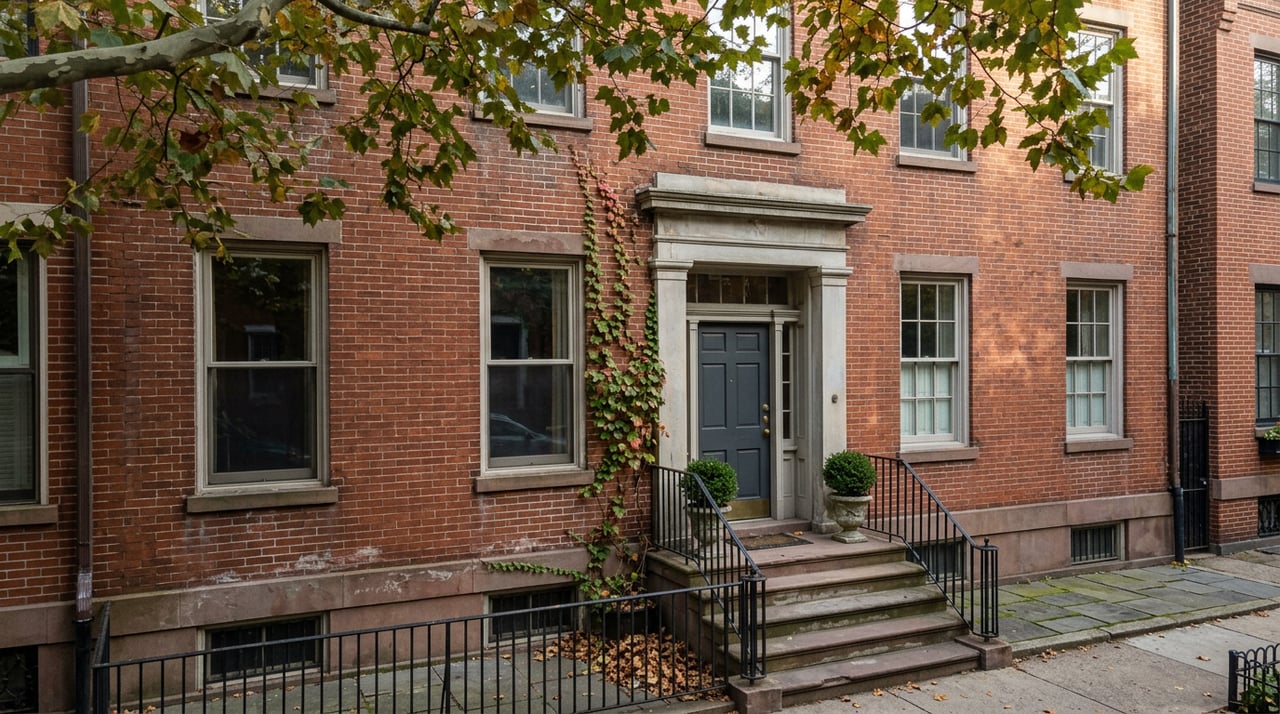
Many West Village townhouse blocks sit within the Greenwich Village Historic District, so pre-listing work should start with a simple question: is your property subject to Landmarks Preservation Commission review? According to the NYC Landmarks Preservation Commission, the Greenwich Village Historic District was designated on April 29, 1969, includes more than 2,000 buildings across more than 65 blocks, and remains the city’s largest historic district.
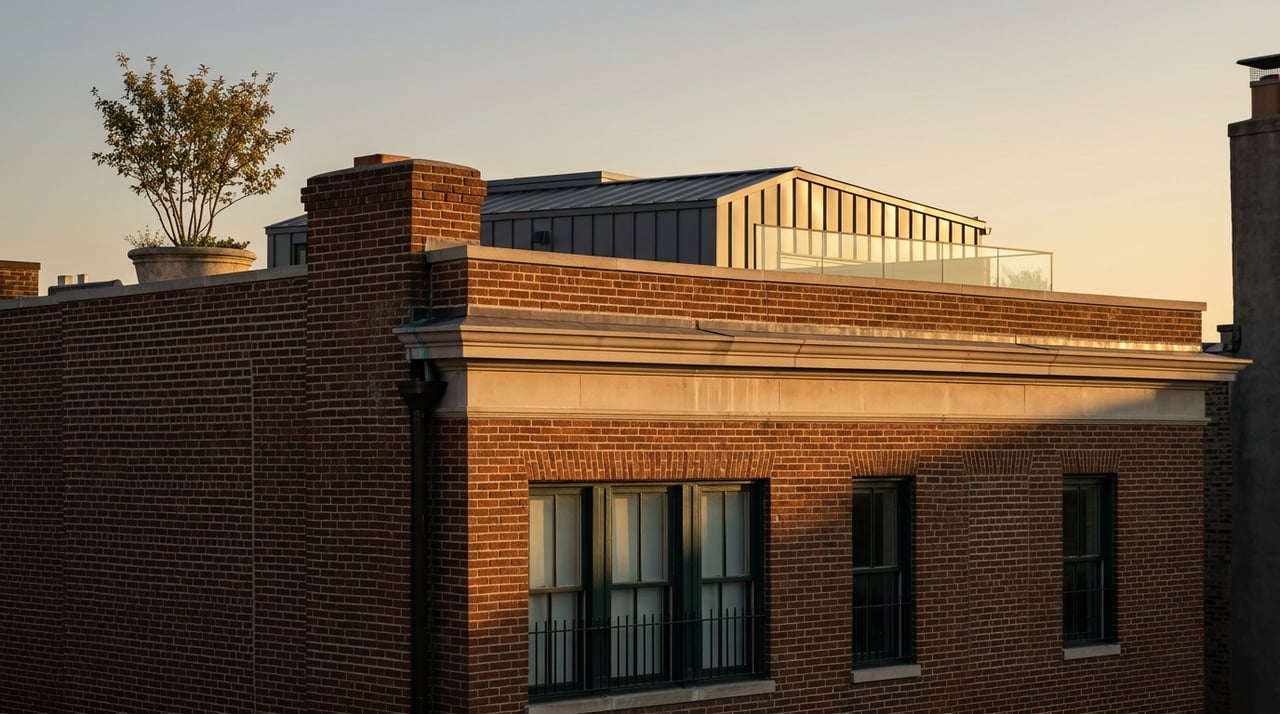
That matters because exterior work often requires review, even when an owner assumes it is minor. The LPC permits and alterations guidance explains that ordinary maintenance like replacing broken window glass, repainting to match the existing color, or caulking around windows and doors generally does not require a permit. But exterior work affecting a landmarked building or a building in a historic district usually does, and review may still be required even when DOB self-certification would otherwise apply.
If you are planning any exterior touch-ups before listing, confirm requirements early. The LPC application process requires owners or their representatives to apply before certain exterior work and some interior work, with materials such as photographs, plans, and presentation documents. LPC also notes that Certificates of No Effect can often be approved within 10 business days once an application is complete, which is helpful, but only if your documents are ready.
Should you repair or replace windows?
Window work is one of the most common pre-sale questions for townhouse owners. In many cases, repair is simpler than replacement, especially in a historic district. The LPC window fact sheet says that most repairs and retrofits do not require a permit, while window replacement does require LPC review and supporting documentation.
That does not mean replacement is impossible. It means the timeline and paperwork are different, and your decision should weigh both resale impact and approval logistics. For some sellers, a careful repair and tune-up may be the cleaner path to market. For others, replacement may make sense if the scope, timing, and documentation are manageable.
LPC also notes that many replacement proposals are handled at staff level, and qualifying Permit for Minor Work applications can carry no LPC fee. If windows are part of your prep list, this is the kind of issue worth evaluating before you set a launch date.
How to prepare the house for today’s buyers
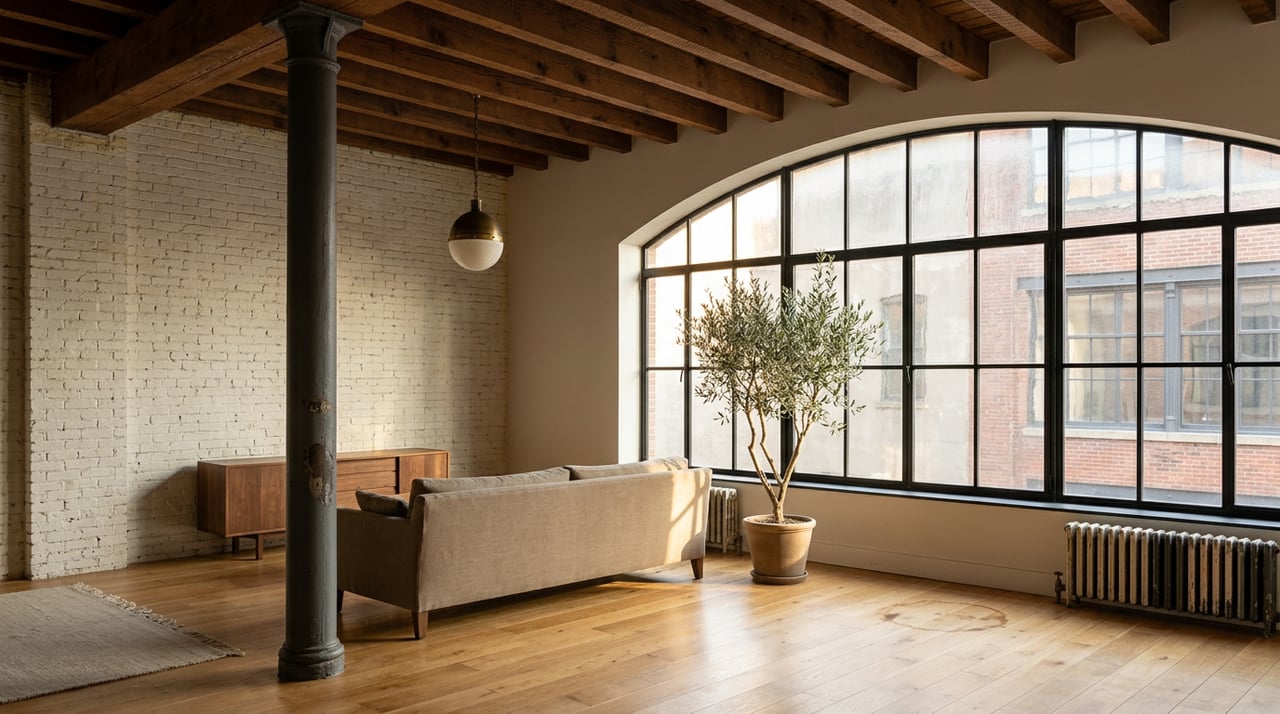
In the West Village, staging should support the house’s original strengths rather than flatten them. Buyers are often responding to period detail, privacy, ceiling height, staircases, millwork, and the feeling of a true townhouse experience. Over-modernizing can weaken the story if it strips away the character that helped make the asset valuable in the first place.
A stronger prep plan usually focuses on:
- Deep cleaning and decluttering
- Paint touch-ups where appropriate
- Minor repairs that improve functionality
- Sensitive restoration of visible historic features
- A clear presentation of layout and legal configuration
- Exterior review well before listing, if work may trigger LPC approval
For lifestyle buyers, the marketing story is often about architecture, scale, outdoor space, and the feel of a preserved low-rise neighborhood. PropertyShark’s West Village overview describes the area as a preserved low-rise district with tree-lined streets and access to Hudson River Park and downtown amenities. That context supports a marketing approach built around the townhouse as both a home and a rare piece of West Village real estate.
For value-add buyers, the story shifts. They tend to focus more on configuration, renovation scope, and whether the house is suited for a light refresh or deeper repositioning. If your property has upside, it should be framed clearly and factually.
When to list a West Village townhouse
Timing matters, but not in a one-size-fits-all way. For a townhouse seller, the best launch window is the one that aligns your prep, approvals, pricing, and marketing with buyer demand. Because the approval process can affect the schedule, it often makes sense to start planning earlier than you would for a standard condo listing.
Nationally, Realtor.com’s 2026 Best Time To Sell report identified April 12 through 18 as the strongest week to list, with homes historically receiving 16.7% more views and selling about nine days faster. While that is national guidance, it is still useful for planning purposes. If you hope to list in a strong spring window, pre-listing work and any needed approvals should begin well in advance.
What a smart pricing strategy looks like now
A good pricing strategy for a West Village townhouse should be specific, not broad. It should account for scarce comps, current buyer expectations, and the real condition of the property. It should also leave room for negotiation without signaling that the house was brought to market without a clear plan.
The 93.0% average sale-to-last-ask ratio reported by BHS is a useful benchmark. Buyers are negotiating, but well-positioned homes are still trading relatively close to ask. That suggests a seller can benefit from disciplined pricing, strong presentation, and a targeted go-to-market strategy instead of chasing attention with an unrealistic number.
In a market with thin data, strategy matters as much as statistics. You need to know how to frame renovated product, how to position value-add inventory, how to prepare for landmark-related questions, and how to present the property to both lifestyle and investor-minded buyers when appropriate.
Selling a West Village townhouse is rarely a plug-and-play process. It is a specialized transaction that benefits from careful valuation, sharp negotiation, and thoughtful execution from prep through closing. If you are thinking about your next move, the Falchiere Group brings a practical, high-service approach to pricing, marketing, and project-driven sales strategy across New York City.
FAQs
How should you price a West Village townhouse compared with nearby condos?
- You generally should not price a West Village townhouse directly against nearby condos or co-ops because apartment medians are much lower and townhouse comps are far more limited, making condition-adjusted townhouse sales the better benchmark.
Can you do exterior work before listing a West Village townhouse?
- Yes, but you should first confirm whether your property is in the Greenwich Village Historic District and whether the planned work requires LPC review, since many exterior changes need approval before work begins.
Should you repair or replace windows before selling a West Village townhouse?
- In many landmarked situations, repairs and retrofits are simpler because they often do not require a permit, while replacement usually requires LPC review and supporting documentation.
When is the best time to list a West Village townhouse for sale?
- Spring can be a strong launch window, and Realtor.com identified April 12 through 18 as the strongest national week to list in 2026, but townhouse sellers should work backward from that date because prep and approvals can take time.
What do buyers care about most when buying a West Village townhouse?
- Buyers usually focus on condition, width, privacy, outdoor space, preserved architectural detail, legal configuration, and the overall quality of the block and location within the neighborhood.